
 Image 1 of 1
The Greater Key of Solomon is a medieval grimoire attributed to King Solomon that catalogs spirits, their ranks and offices, and the rituals used to call and command them. It presents magic as ordered practice shaped through names, seals, preparation, and will. Each operation follows a clear sequence of intent, boundary, invocation, negotiation, and release. Power emerges through structure, and structure determines what changes in the world.
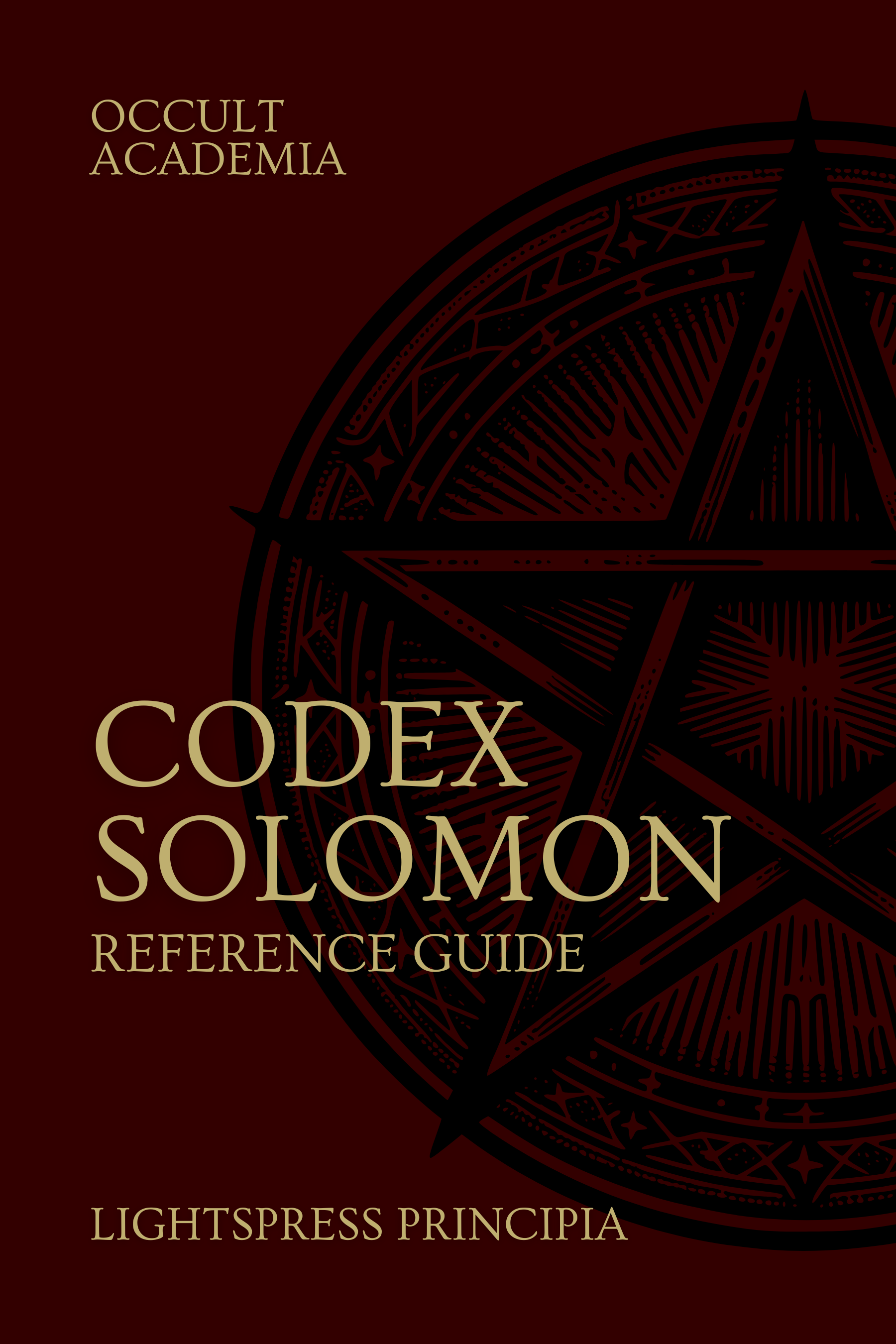
Codex Solomon brings that structure into Principia play. This book treats the grimoire as a framework for story rather than a script to reenact. Spirits stand as active forces with motives, hierarchies, and defined reach. Rank signals scale before the first word of the conjuration is spoken. Seals and circles define space and vulnerability at the table. Ritual steps become scene beats that focus attention and concentrate risk.
The purpose of Codex Solomon is to provide a reliable way to run occult scenes that matter. Every summoning begins with declared intent, so the table understands what success will alter. Preparation creates exposure and invites interference. Invocation draws a specific will into focus. Negotiation forces terms into the open and ties authority to cost. Release leaves something altered, whether in alliance, access, reputation, or balance of power.
This structure strengthens conflict framing. Calling a lesser spirit might resolve a narrow problem while introducing a contained obligation. Calling a king can redirect the course of a campaign. Rank communicates scope, which helps calibrate stakes before action begins. A named spirit stands as a defined opponent with appetite and leverage. Each encounter becomes a contest between wills with visible consequence.
Codex Solomon is built for adaptation across systems. Spirit entries present motive, leverage, cost, and fallout rather than fixed mechanics. Ritual phases translate into rolls, clocks, tokens, or narrative rulings within the framework of your choice. Circles and seals function as fictional positioning that maps cleanly onto protection, advantage, or constraint. The material remains centered on what changes in play, which allows it to integrate without friction.
At the table, a summoning scene gains shape and momentum. A character prepares a consecrated space while rivals watch and tensions rise. A spirit manifests within defined bounds and demands recognition. Terms are proposed and weighed. An agreement is struck, and the spirit departs, leaving behind knowledge and a binding promise that complicates the next session. The ritual doesn't close the story, but propels it forward.
The benefit is focus. Scenes open with purpose and close with lasting effect. Decisions carry weight because authority requires preparation and risk. Pacing sharpens as each ritual phase marks a shift in pressure. The occult becomes a deliberate engine of movement that shapes alliances, power, and consequence across the campaign.
Codex Solomon positions the Greater Key as a living tool for narrative play. Knowledge becomes leverage. Leverage becomes action that reshapes relationships and opportunity. Each rite alters the campaign in ways that endure, turning ordered procedure into sustained tension, escalation, and reckoning within the occult tradition.
Disclaimer
This series uses historical occult texts as creative fuel and treats every element as fiction. Readers can enjoy the mood and symbolism, but none of it’s meant as instruction or encouragement of belief. The work isn’t a guide to real practice, and anyone who treats it as such accepts full responsibility for that choice.