
 Image 1 of 1
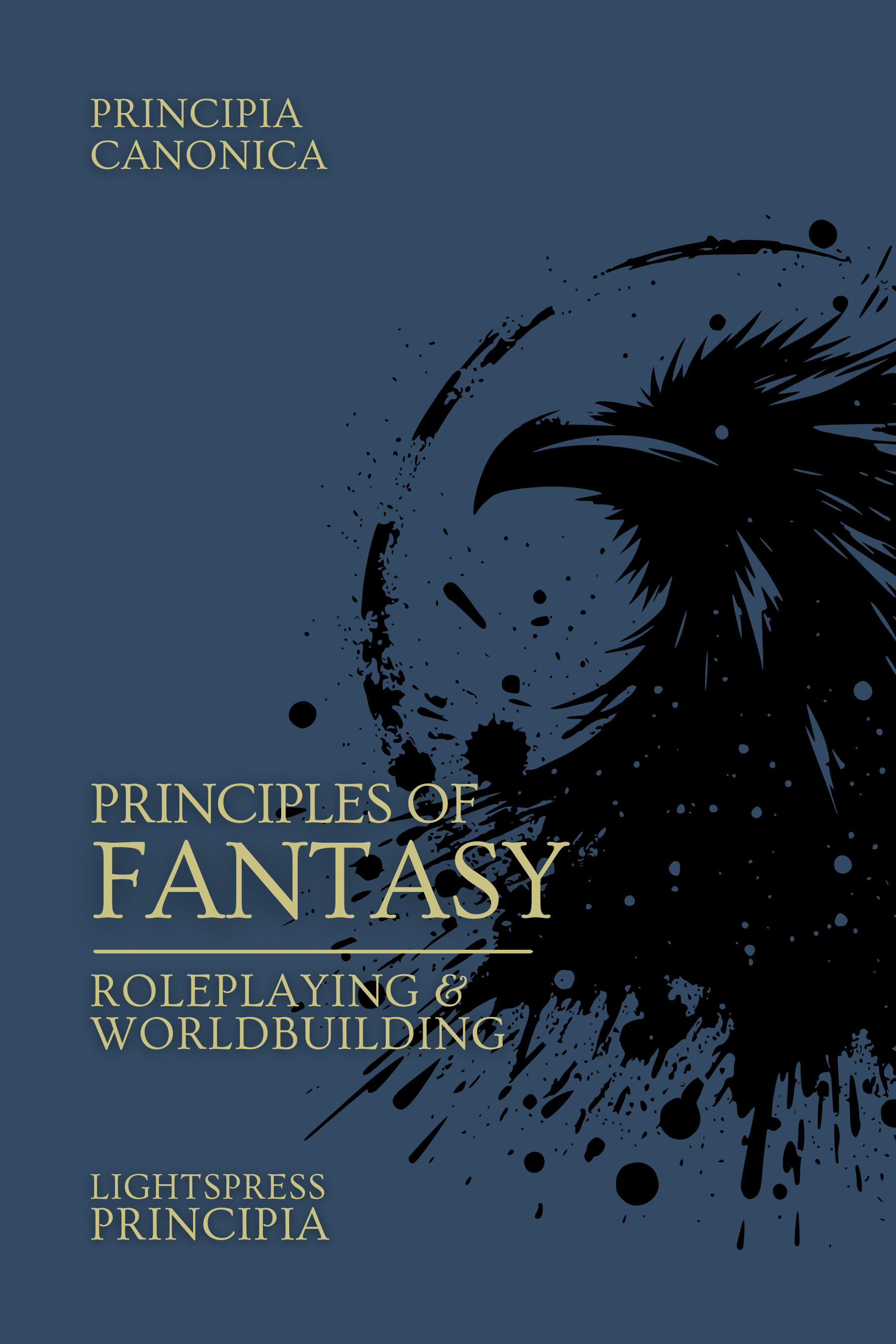
Principles of Fantasy
131 pages. PDF and EPUB files included
Print and ebook editions available through many online retailers
The Principles of Genre series provides practical guidance for designing roleplaying campaigns and settings. Each volume examines how a particular genre works: the kinds of worlds it imagines, the types of characters it favors, and the conflicts that drive its stories. Instead of presenting a single prewritten setting, these books examine recurring, reusable patterns that shape the genre. Recognizing those patterns can help gamemasters adapt these ideas from fiction and film, so they can run games that reflect the tone and expectations of the genre they want to explore. Every volume in the series follows the same four-part structure. This shared framework allows you to move easily from one book to another, even when applying the ideas to your own games.
Worldbuilding
The first section examines the structure of the genre’s setting, exploring the environments, assumptions, and conditions that define it. Some place stories in wild frontiers, others in crowded cities or distant planets. Technology, magic, cultural norms, and social hierarchy all influence how people live in that world. This section identifies those elements that make the genre recognizable. Recognizing these foundations helps you to design locations that support the tone of the genre.
Characters
The second section turns to the people who inhabit the world. Each genre has recognizable character roles, which influence how stories unfold. Some heroes travel in search of danger, even as others defend communities, investigate crimes, or challenge powerful institutions. This section examines common archetypes, along with character motivations and internal conflicts. For roleplaying games, these patterns help you to create characters whose goals and decisions naturally generate stories suited to the genre.
Factions
The third section focuses on the groups and organizations that shape power and conflicts in the setting. Factions include but aren’t limited to political institutions, secret societies, guilds, religious orders, criminal organizations, and rival powers. These groups give the world structure, and their competing interests create tension, alliances, and opportunities for adventure. Understanding how factions operate in a genre helps you to create a world where events continue to unfold beyond the actions of the player characters.
Adventure Design
The final section examines how stories take shape during roleplaying. Every genre encourages particular kinds of conflicts and resolutions. Some adventures center on exploration, others on investigation, survival, rebellion, or social intrigue. This section explains how the earlier elements combine to produce engaging roleplaying scenarios. The environment introduces challenges, player characters pursue goals, and the factions bring competing agendas into play. When these elements all intersect, adventures emerge. You can use these patterns when preparing one-shot sessions, regular adventures, or longer campaign arcs.
Combining Genres
Because every volume in the series follows this same structure, you can combine them to create new campaign settings. Remix worldbuilding, characters, factions, and adventure patterns into original settings and campaigns that feel familiar, yet remain distinct and uniquely your own.
131 pages. PDF and EPUB files included
Print and ebook editions available through many online retailers
The Principles of Genre series provides practical guidance for designing roleplaying campaigns and settings. Each volume examines how a particular genre works: the kinds of worlds it imagines, the types of characters it favors, and the conflicts that drive its stories. Instead of presenting a single prewritten setting, these books examine recurring, reusable patterns that shape the genre. Recognizing those patterns can help gamemasters adapt these ideas from fiction and film, so they can run games that reflect the tone and expectations of the genre they want to explore. Every volume in the series follows the same four-part structure. This shared framework allows you to move easily from one book to another, even when applying the ideas to your own games.
Worldbuilding
The first section examines the structure of the genre’s setting, exploring the environments, assumptions, and conditions that define it. Some place stories in wild frontiers, others in crowded cities or distant planets. Technology, magic, cultural norms, and social hierarchy all influence how people live in that world. This section identifies those elements that make the genre recognizable. Recognizing these foundations helps you to design locations that support the tone of the genre.
Characters
The second section turns to the people who inhabit the world. Each genre has recognizable character roles, which influence how stories unfold. Some heroes travel in search of danger, even as others defend communities, investigate crimes, or challenge powerful institutions. This section examines common archetypes, along with character motivations and internal conflicts. For roleplaying games, these patterns help you to create characters whose goals and decisions naturally generate stories suited to the genre.
Factions
The third section focuses on the groups and organizations that shape power and conflicts in the setting. Factions include but aren’t limited to political institutions, secret societies, guilds, religious orders, criminal organizations, and rival powers. These groups give the world structure, and their competing interests create tension, alliances, and opportunities for adventure. Understanding how factions operate in a genre helps you to create a world where events continue to unfold beyond the actions of the player characters.
Adventure Design
The final section examines how stories take shape during roleplaying. Every genre encourages particular kinds of conflicts and resolutions. Some adventures center on exploration, others on investigation, survival, rebellion, or social intrigue. This section explains how the earlier elements combine to produce engaging roleplaying scenarios. The environment introduces challenges, player characters pursue goals, and the factions bring competing agendas into play. When these elements all intersect, adventures emerge. You can use these patterns when preparing one-shot sessions, regular adventures, or longer campaign arcs.
Combining Genres
Because every volume in the series follows this same structure, you can combine them to create new campaign settings. Remix worldbuilding, characters, factions, and adventure patterns into original settings and campaigns that feel familiar, yet remain distinct and uniquely your own.