 Image 1 of 1
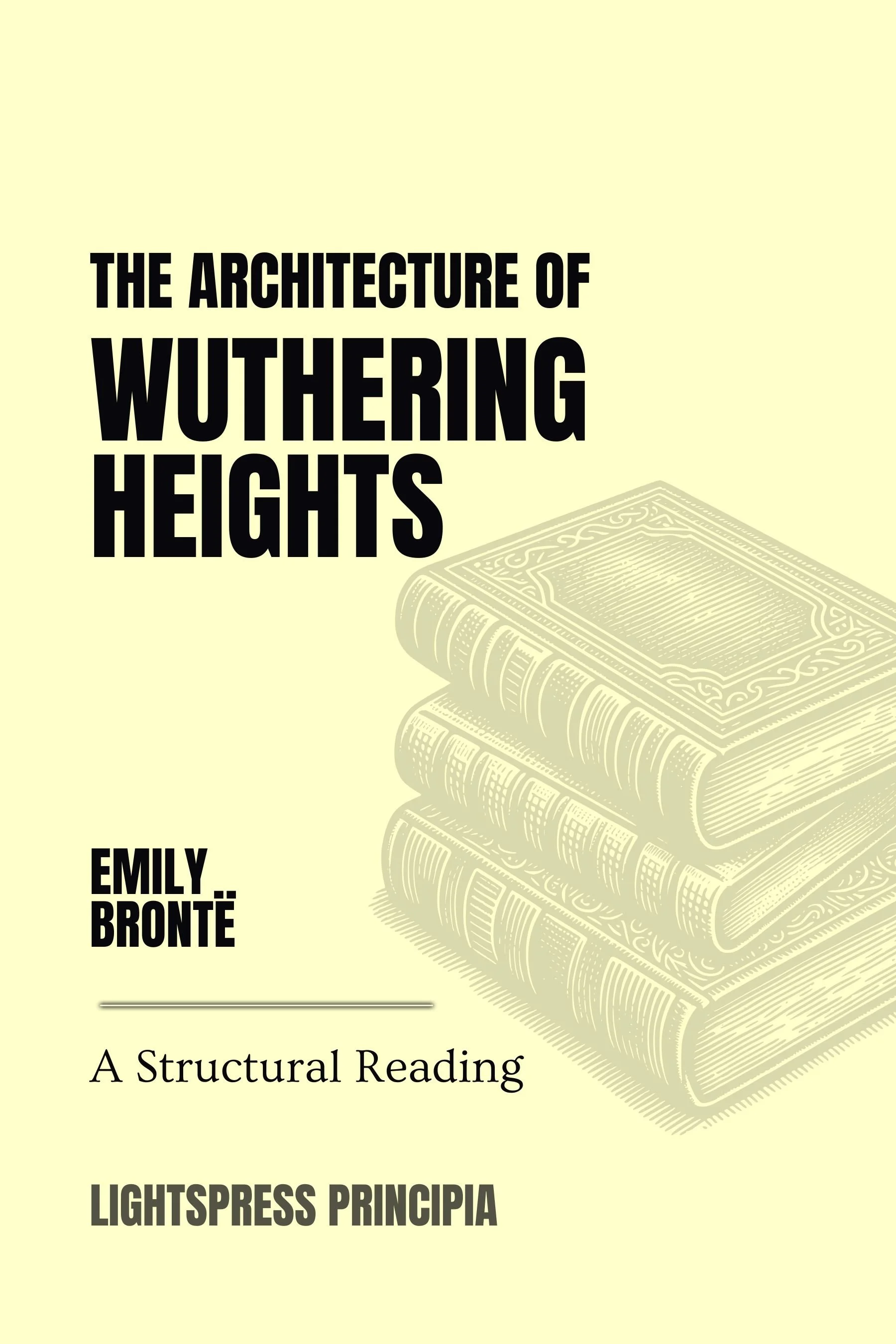
The Architecture of Wuthering Heights
Sale Price:
$1.00
Original Price:
$4.99
23 pages. PDF and EPUB files included
Digital only
This volume examines Wuthering Heights through cause and consequence, rather than as a record of romantic intensity or isolated psychology. The analysis tracks how instability enters a bounded social environment, how characters respond through decision, and how those decisions create effects that persist. Events continue to exert force after their apparent conclusion, shaping later action and narrowing what remains possible. The focus is how the narrative generates movement through accumulated consequence.
The structure spans two generations, and that continuity governs interpretation. Early actions don’t dissipate with time. They intensify, transfer, and return in altered form, extending their reach into a second set of lives. The later narrative inherits unresolved conditions rather than replacing them. Prior action remains active, so the second generation operates as continuation under increased strain.
Three forces organize that progression. Attachment defines identity. Characters locate themselves within bonds that resist alteration, even when those bonds produce harm. Exclusion forms the conditions under which that identity develops. Social rejection and displacement shape perception, limit belonging, and fix position within the system. Retaliation follows as a sustaining mechanism. Injury produces response, response produces further injury, and the cycle continues without correction. Together these forces create a self-reinforcing pattern that resists stabilization.
At the center stands a relationship that won’t integrate into the surrounding order. It doesn’t adapt to constraint or accept substitution. Instead, it exerts continuous strain against the structures that attempt to contain it. Separation fails, replacement fails, and control fails, because the attachment itself rejects resolution within existing terms. Households fracture, authority destabilizes, and identity aligns with opposition rather than cohesion.
This lens requires active tracking. Initial instability expands, transfers, and saturates the system. Each decision follows from prior cause and shapes what can occur next. Early conditions accumulate and constrain future movement, so later developments carry the weight of what preceded them. Transformation emerges from sustained pressure present from the beginning, producing an outcome that follows from the system the narrative has constructed.
23 pages. PDF and EPUB files included
Digital only
This volume examines Wuthering Heights through cause and consequence, rather than as a record of romantic intensity or isolated psychology. The analysis tracks how instability enters a bounded social environment, how characters respond through decision, and how those decisions create effects that persist. Events continue to exert force after their apparent conclusion, shaping later action and narrowing what remains possible. The focus is how the narrative generates movement through accumulated consequence.
The structure spans two generations, and that continuity governs interpretation. Early actions don’t dissipate with time. They intensify, transfer, and return in altered form, extending their reach into a second set of lives. The later narrative inherits unresolved conditions rather than replacing them. Prior action remains active, so the second generation operates as continuation under increased strain.
Three forces organize that progression. Attachment defines identity. Characters locate themselves within bonds that resist alteration, even when those bonds produce harm. Exclusion forms the conditions under which that identity develops. Social rejection and displacement shape perception, limit belonging, and fix position within the system. Retaliation follows as a sustaining mechanism. Injury produces response, response produces further injury, and the cycle continues without correction. Together these forces create a self-reinforcing pattern that resists stabilization.
At the center stands a relationship that won’t integrate into the surrounding order. It doesn’t adapt to constraint or accept substitution. Instead, it exerts continuous strain against the structures that attempt to contain it. Separation fails, replacement fails, and control fails, because the attachment itself rejects resolution within existing terms. Households fracture, authority destabilizes, and identity aligns with opposition rather than cohesion.
This lens requires active tracking. Initial instability expands, transfers, and saturates the system. Each decision follows from prior cause and shapes what can occur next. Early conditions accumulate and constrain future movement, so later developments carry the weight of what preceded them. Transformation emerges from sustained pressure present from the beginning, producing an outcome that follows from the system the narrative has constructed.